Flower Ball: A Guide to Digital Papercraft
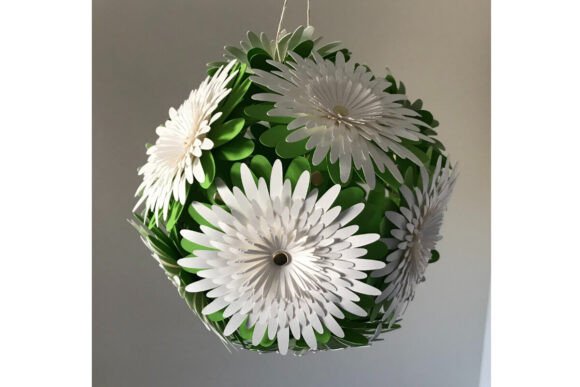
There is a distinct satisfaction in transforming a flat sheet of paper into a three-dimensional object. It bridges the gap between digital design and tactile reality, offering a creative outlet that is both meditative and visually striking. The Flower Ball exemplifies this blend of artistry and engineering. Whether you are a seasoned crafter looking for your next project or an educator seeking hands-on activities for students, this geometric floral sphere offers endless possibilities for decoration, learning, and professional display.
This guide explores the practicalities of creating a Flower Ball using modern digital tools. We will delve into the materials needed, the differences between working with PDF and SVG files, and how this simple yet elegant craft can enhance various personal and professional environments.
Understanding the Digital Template Advantage
In the past, creating complex papercraft required drawing intricate patterns by hand or tracing from physical books. Today, the process is streamlined through INSTANT DIGITAL DOWNLOAD ITEM formats. When you purchase a template for a Flower Ball, you are investing in precision and convenience. These digital files ensure that every petal, fold line, and tab is mathematically accurate, resulting in a symmetrical and professional-looking final product.
It is crucial to understand that you are purchasing a digital product. No physical items will be shipped to your door. Instead, you receive immediate access to high-quality files that allow you to print as many copies as you need. This model is particularly beneficial for educators who may need multiple sets for a classroom, or for event planners who require consistent decor across a large venue.
Key File Formats: PDF vs. SVG
Your download will typically include two primary file types, each serving a different workflow. Understanding which one suits your tools is the first step toward success.
- PDF Files: Ideal for traditional crafters. These are ready-to-print documents that maintain their layout regardless of the software used to open them. They are perfect if you prefer cutting by hand or using a standard home printer.
- SVG Files: Designed for digital cutting machines like Cricut or Silhouette. These vector files allow for precise scaling and automated cutting. Note that the SVG files will come in a zipped folder, so you will need to extract them before importing them into your design software.
Materials and Preparation
The beauty of papercraft lies in its accessibility. However, the quality of your final Flower Ball depends heavily on the materials you choose. While creativity is key, structural integrity requires specific supplies.
Paper Quality Matters
For a Flower Ball to hold its shape without sagging or tearing, standard printer paper is insufficient. It is recommended to use cardstock with a weight of at least 180-200gsm. This thickness provides enough rigidity to support the 3D structure while still being flexible enough to fold cleanly along the score lines.
Essential Tools
Depending on your chosen method, gather the following:
- For PDF Users: A reliable printer, sharp scissors, a ruler for crisp folds, and adhesive. Double-sided tape is often the fastest and cleanest option, though a glue gun provides strong bonds for heavier cardstock.
- For SVG Users: Access to cutting machine software (such as Cricut Design Space), a compatible cutting machine, and scoring tools. A basic knowledge of SVG files and how to manipulate them in your software is assumed.
If you are unsure where to source high-quality materials, consider visiting specialized retailers. For instance, you might click here to visit the 12×12 Cardstock Shop. Please note that this is a paid link at no extra cost to you, supporting the creation of more free resources like this guide.
Step-by-Step Creation Process
Creating your Flower Ball is a straightforward process, but attention to detail ensures a polished result. Here is how to approach both methods.
Using PDF Files
- Download and Unzip: Locate your downloaded file and extract the contents if they are compressed.
- Print the Template: Ensure your printer settings are set to "Actual Size" or "100% Scale" to avoid distortion. Print onto your chosen 180-200gsm cardstock.
- Cut Out the Parts: Use sharp scissors to carefully cut along the outer lines. Precision here affects how well the pieces fit together later.
- Fold Along Lines: Use a ruler to create sharp, clean folds along the designated folding lines. Pre-folding helps the assembly process significantly.
- Glue Parts Together: Apply adhesive to the tabs and connect the petals. Start with small clusters before joining them into the full sphere.
Using SVG Files
- Prepare Your Software: Open your cutting machine’s software (e.g., Design Space) and import the unzipped SVG file.
- Set Cut and Score Lines: Assign the correct operations to each line type. Typically, solid lines are for cutting, and dashed lines are for scoring.
- Load Material: Place your cardstock on the cutting mat and load it into your Cricut or Silhouette machine.
- Cut and Score: Let the machine do the heavy lifting. The scoring tool will create indentations that make folding effortless and uniform.
- Assemble: Fold along the scored lines and glue the parts together. As with the PDF method, double-sided tape can speed up this stage.
Practical Applications and Benefits
Why invest time in making a Flower Ball? Beyond the joy of creation, these objects serve functional and aesthetic roles in various settings.
Event Decor and Branding
For wedding planners, party organizers, or retail marketers, Flower Balls offer a customizable decor solution. Unlike mass-produced plastic decorations, papercraft spheres can be color-matched exactly to a brand’s palette or event theme. They add texture and depth to photo backdrops, centerpieces, and hanging installations. Because you control the production, you can scale up quickly for large events by printing multiple sheets simultaneously.
Educational Value
In classrooms, constructing a Flower Ball teaches geometry, spatial reasoning, and fine motor skills. Students learn about symmetry, angles, and the transformation of 2D shapes into 3D forms. It is a tangible way to discuss mathematical concepts while engaging in artistic expression.
Mindfulness and Productivity
For professionals and hobbyists alike, the repetitive nature of folding and gluing can be deeply calming. It serves as a digital detox, allowing you to focus on a single, manageable task. Completing a complex structure like a Flower Ball provides a sense of accomplishment that can boost morale and creativity in other areas of work.
Final Thoughts on Craftsmanship
The Flower Ball is more than just a decorative item; it is a testament to the power of precise design and careful execution. By leveraging digital templates, you eliminate the guesswork of pattern creation, allowing you to focus on the assembly and customization aspects. Whether you choose the manual route with PDFs or the automated precision of SVGs, the result is a stunning piece of art that reflects your effort and attention to detail.
Remember, the key to a successful project lies in preparation. Choose the right paper weight, keep your tools sharp, and take your time with the folding process. With these elements in place, your Flower Ball will not only look professional but also stand the test of time as a cherished piece of handmade decor.