Strategic Branding with the Heart Stethoscope Lid Topper
In the modern landscape of personal branding and small business operations, every touchpoint matters. Whether you are a healthcare professional, a medical student, or a creative entrepreneur in the wellness space, the tools you use daily serve as silent ambassadors for your identity. The Heart Stethoscope Lid Topper represents more than just a decorative accessory; it is a strategic asset for visibility and personalization. By integrating this specific design into your daily routine, you transform a standard utility item into a canvas for professional expression.
This digital asset is not merely a graphic; it is a precision-engineered file intended for laser cutting, specifically tested on high-performance hardware like the OMTECH 100-watt laser using LightBurn software. Understanding the technical nuances and strategic applications of this tool can significantly enhance how you approach customization, whether for personal use, client gifts, or retail products.
The Strategic Value of Personalized Medical Accessories
For professionals in the medical field, differentiation is often subtle yet critical. A stethoscope is an extension of the practitioner, but the hydration vessel accompanying them through long shifts is equally visible. Utilizing a Heart Stethoscope Lid Topper allows for a cohesive visual narrative. It signals attention to detail and a passion for the profession without being overtly promotional.
From a marketing perspective, this type of customization supports brand recall. If you are running a small business selling medical accessories or personalized gifts, offering a product that fits popular containers like the Stanley Flowstate H2.0 series positions you as a provider who understands current market trends. The 30 oz. and 40 oz. sizes are industry standards for durability and capacity, making compatibility with these specific lids a smart business decision. It ensures that your product meets the customer where they already are, rather than asking them to change their habits.
Technical Precision and Material Considerations
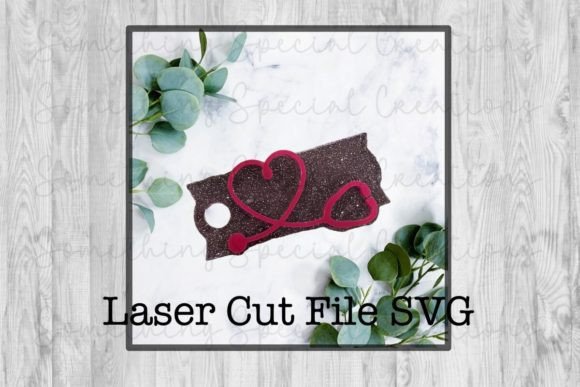
Successful execution of any laser-cut project relies heavily on understanding the material constraints and machine capabilities. This Heart Stethoscope Lid Topper is designed as a two-layer system, which adds depth and durability to the final product. The stethoscope element is cut separately and requires adhesive attachment, allowing for multi-material creativity. For instance, you might choose a contrasting color for the heart symbol to make it pop against the base layer.
The file has been rigorously tested using 1/8 inch acrylic, a material chosen for its balance of rigidity and ease of cutting. However, strategic planning requires adaptability. If you intend to use different materials—such as wood, leather, or varying thicknesses of acrylic—you must account for potential dimensional changes. Materials expand, contract, and kerf differently under laser heat. Therefore, a test cut is not just a suggestion; it is a necessary step in quality control.
- Machine Compatibility: While optimized for OMTECH lasers and LightBurn, the SVG format ensures broad compatibility with other CO2 lasers and software suites.
- Layer Management: The two-layer design requires precise alignment. Ensure your laser software is set to cut layers in the correct order to facilitate easy assembly.
- Adhesive Selection: Since the stethoscope piece is separate, using a high-bond industrial adhesive or epoxy ensures longevity, especially given the frequent handling of water bottles.
Planning Your Production Workflow
Efficiency in production is driven by preparation. Before launching a batch of Heart Stethoscope Lid Toppers, consider the workflow implications. Because this is a digital file only, you retain full control over inventory and production timing. This on-demand model reduces waste and storage costs, aligning with lean operational principles.
When preparing the file in your laser software, remember that this asset is meant to be uploaded and cut as-is. Editing the file outside of recommended software like Silhouette Design may compromise the vector integrity, leading to poor cut quality or fit issues. This restriction is not a limitation but a quality assurance measure. It ensures that every unit produced maintains the exact dimensions required to fit the Stanley Flowstate lids securely.
For educators and trainers in vocational fields, this file can serve as an excellent teaching tool. It demonstrates the importance of file formats, material testing, and the relationship between digital design and physical output. Students learn that a successful product is not just about aesthetics but about functional fit and material science.
Risk Mitigation and Quality Assurance
One of the most common pitfalls in custom manufacturing is assuming universal compatibility. This Heart Stethoscope Lid Topper is explicitly tested for 30 oz. and 40 oz. Stanley Flowstate H2.0 lids. It is not guaranteed to fit other brands or models. Relying on it for untested containers introduces risk to your reputation if you are selling these items. Clear communication with end-users is essential. Specify exactly which lids are supported to manage expectations and reduce return rates.
Furthermore, the decision to use this file should be guided by your target audience’s preferences. If your clientele values minimalism, a single-color acrylic cut might suffice. If they prefer vibrancy, the two-layer design allows for creative color combinations. Understanding these preferences helps in positioning the product effectively. Misalignment between product features and customer desires can lead to stagnant inventory, even if the technical execution is flawless.
Long-Term Branding and Customer Experience
Integrating the Heart Stethoscope Lid Topper into your offerings can enhance customer experience by providing a sense of exclusivity and personal connection. For healthcare workers, seeing a symbol of their profession on their daily gear can boost morale and sense of belonging. For buyers purchasing gifts, it offers a thoughtful, tailored option that stands out from generic merchandise.
From a long-term strategic view, consistency in quality builds trust. By adhering to the recommended material thicknesses and performing test cuts, you ensure that every customer receives a product that fits perfectly and lasts. This reliability encourages repeat business and word-of-mouth referrals, which are invaluable for small businesses and freelancers.
Additionally, consider the environmental angle. Using durable materials like acrylic means the topper is reusable and long-lasting, reducing the need for disposable alternatives. This aligns with growing consumer demand for sustainable and thoughtful consumption practices.
Decision-Making Framework for Creators
Before committing to production, ask yourself several key questions:
- Who is the end user? Are they nurses, doctors, or medical students? Their specific sub-culture may influence color choices and presentation.
- What is the production scale? For small batches, manual assembly of the two layers is feasible. For larger volumes, consider jig systems to speed up the gluing process.
- How does this fit into my broader catalog? Does this topper complement other medical-themed designs you offer? Creating a cohesive collection can increase average order value.
By approaching the Heart Stethoscope Lid Topper with this level of strategic intent, you move beyond simple crafting into meaningful product development. It becomes a tool for achieving better results in branding, customer satisfaction, and operational efficiency.
Final Thoughts on Intentional Customization
The power of digital fabrication lies in its ability to turn ideas into tangible assets quickly. However, the difference between a hobbyist project and a professional product lies in the details. The Heart Stethoscope Lid Topper is a prime example of how a small, well-executed detail can have a significant impact. It requires respect for the technical specifications, an understanding of the target audience, and a commitment to quality.
Remember, this is a digital file only. You will not receive a physical item. This distinction is crucial for setting the right expectations. Your role is to bridge the gap between the digital design and the physical world through skilled craftsmanship. By doing so intentionally, you create value that resonates with users and supports your broader professional goals. Whether you are enhancing your own daily carry or building a product line for others, let precision and purpose guide your process.